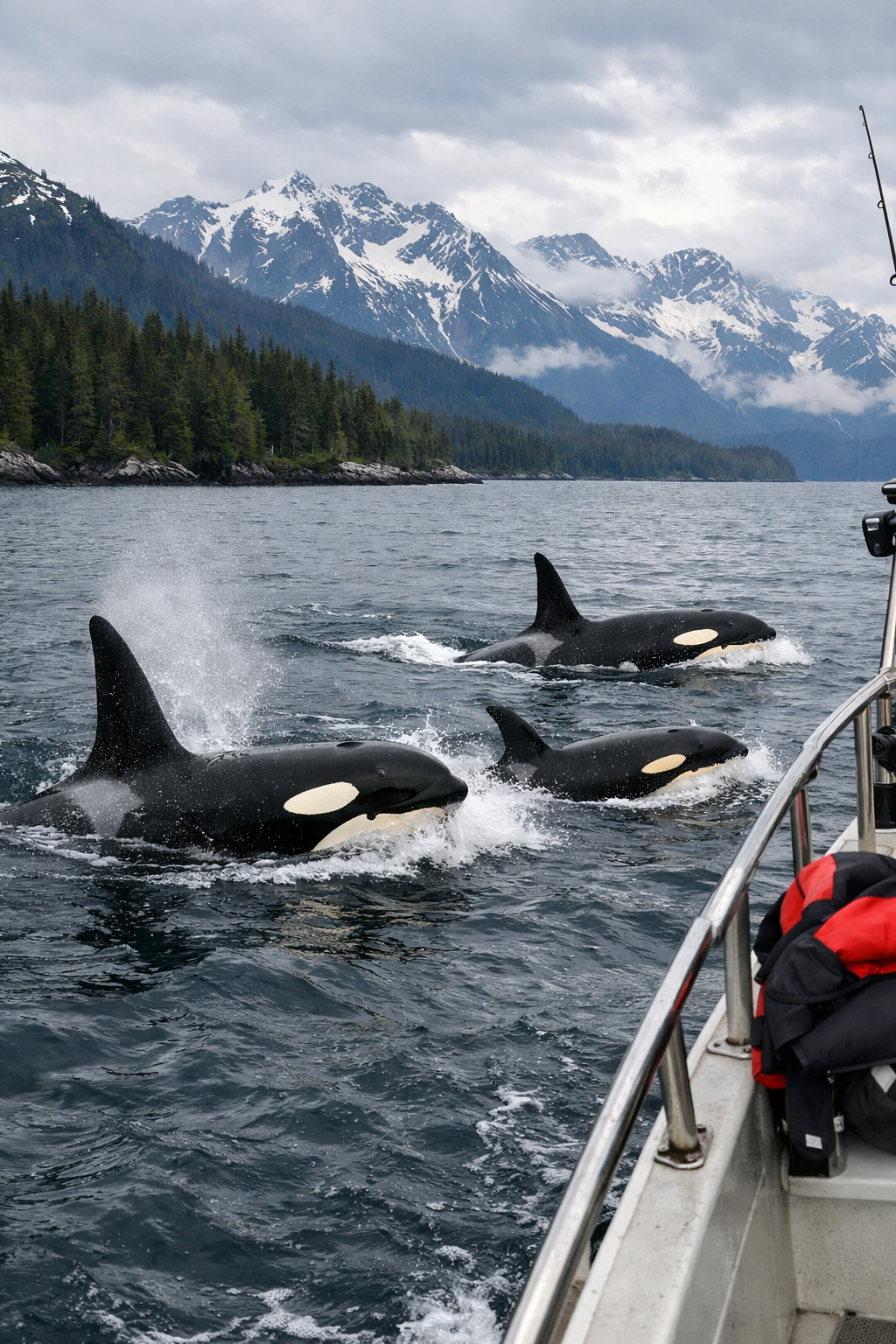
アラスカの marine wildlife を語るとき、 humpbacks は壮大さで心をつかむ。 sea otters はやわらかさで記憶に残る。 でも orcas は、もっと鋭い。 現れた瞬間に海の雰囲気そのものが引き締まる。 それは彼らが top predator だからでもあり、 ただ大きいだけではない social intelligence の気配を持っているからでもあります。
orcas の魅力は、
巨大さより先に、
意志を感じさせることにある。

まず、orcas は何者なのか
killer whale という名前は強烈ですが、 biologically は dolphin family の largest member です。 つまり whales らしい大きさを持ちながら、 lineage としては dolphins の側にいる。 その少し不思議な位置づけも、この動物の mythic feel を強めています。
さらに面白いのは、 Alaska and North Pacific の orcas を “ひとつの同じ動物” として見るだけでは足りないことです。 official materials では resident, transient / Bigg’s, offshore という distinct types が説明され、 それぞれ diet, behavior, movement, genetics が違う。 つまり海に見える black-and-white silhouette の裏側には、かなり深い diversity があるのです。
覚えやすい基本: resident は主に fish-eaters、Bigg’s / transient は主に marine mammal hunters。
大事な視点: orcas の違いは “見た目” より “食べ方と生き方” に出る。
orcas は、アラスカの海を “知性ある野生” に見せる動物
humpback は力と優雅さで記憶に残る。 でも orca は、そこに mind-like sharpness を加える。 背びれの角度、surface の timing、pod としての movement。 どれも mechanical ではなく、intentional に見える瞬間があります。
それが、この動物をただの large marine mammal ではなく、 marine Alaska の most electric encounters のひとつにしている理由です。
resident と Bigg’s / transient を知ると、orcas は suddenly 深くなる
Kenai Fjords の official NPS pages でも、 resident and transient populations are most frequently observed と説明されています。 同じ水域を share していても、 residents は主に fish、 Bigg’s / transients は marine mammals を狙う。 しかも interbreeding は観察されていない。
つまり “orcas” はひとつの image で語れても、 lived world はかなり違う。 ここが一番面白いところです。
orcas の diet は、単なる menu ではなく culture そのもの
NOAA の説明が beautiful なのは、 killer whale diet is primarily determined by the culture of each ecotype とはっきり言うところです。 つまり resident が salmon-centered なのも、 Bigg’s が marine mammals を狙うのも、 availability だけではなく learned hunting tactics の話でもある。
これはすごいことです。 食べ物の違いが、behavior, movement, social life まで含めた “海の文化圏” を作っている。 だから orcas を知ることは、animal behavior の深さを知ることでもあります。
Kenai Fjords と Prince William Sound は、orcas を考える上で非常に強い
visitor point of view では、 Kenai Fjords は very strong gateway です。 boat tours の文脈で orcas, humpbacks, sea otters, sea lions が一緒に語られやすく、 marine wildlife richness の中で orcas encounter が起こる。
そして Prince William Sound も important。 state guidance でも resident marine mammals の一部として killer whales が挙げられていて、 protected waterways と rich marine habitat の中で、 orcas が “この海の resident force” として感じられる場所です。
orcas encounter は、長さより “数秒の密度” が記憶に残る
humpbacks は longer, slower surface sequences で見やすいことがあります。 でも orcas の魅力は、数秒の強さにあることが多い。 dorsal fin が立ち、 surface line がきれいで、 pod が少しずつズレながら進む。 その短い sequence が、海全体の tension を変えてしまう。
だから orca watching は、“たくさん見たか” より、 “どういう瞬間に出会えたか” が残りやすいテーマです。
orcas は iconic だからこそ、追いかけない viewing が美しい
orcas は drama があるので、 人はつい “もっと近く” を望みがちです。 でも really good encounter は、 無理に cut across したり、追い回したりしない中で起こることが多い。 official marine wildlife viewing logic でも、 movement を邪魔しないこと、自然な behavior を変えないことが very important です。
近さより、natural movement。 それが結果としていちばん cinematic な orca encounter になります。
日本の旅行者にとっての orcas の魅力
日本の旅行者にとって orcas は、 “強くて美しい marine icon” として very immediate かもしれません。 でも Alaska で見る魅力は、そこに ecology の depth が重なることです。
fish-eating residents と mammal-eating Bigg’s が、 同じ broad Alaska waters の中で different worlds を生きている。 その fact を知ってから見ると、 black-and-white の silhouette は suddenly もっと rich に見えてきます。
orcas は、“見た” より “海の intelligence を感じた” が正しいかもしれない
really good orca encounter では、 水しぶきや fin の shape だけではなく、 pod の rhythm そのものが残ります。 つまりそれは whale sighting であると同時に、 marine Alaska の intelligence を一瞬だけ見せられた experience に近い。 そこが、このテーマの深さであり、忘れがたさです。